Clove-The King of Spices, Timeless and Enduring
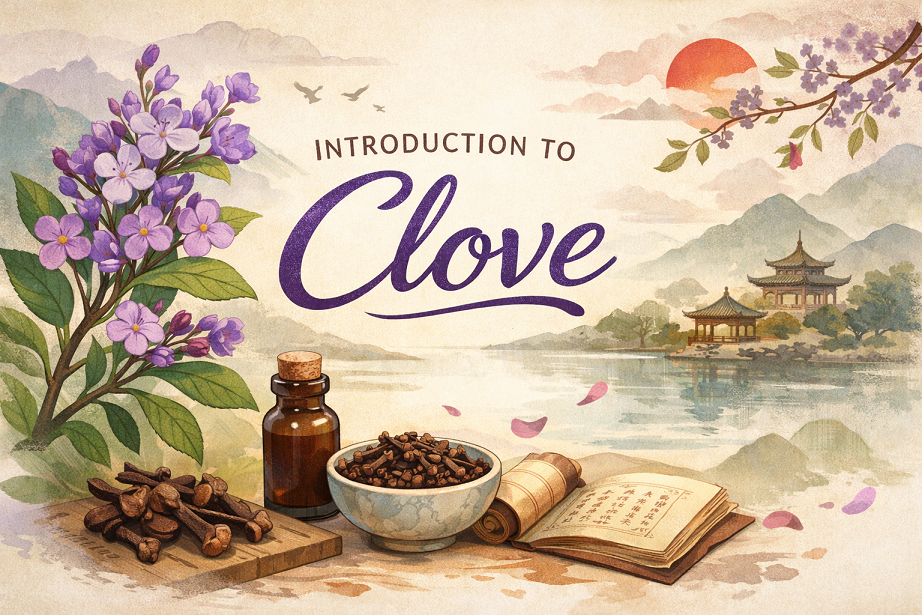
Clove, this precious spice bearing the legacy of millennia of medical civilization, is hailed alongside agarwood as a treasure within the treasure trove of traditional Chinese medicine. It is not only a prized aromatic but also a vital herb for warming the middle burner, alleviating counterflow, dispelling cold, and relieving pain. It holds an irreplaceable position in traditional Chinese medicine’s warming agents and the treatment of digestive system disorders.
1. Origin and Formation of Cloves
Cloves are the dried flower buds of the clove tree (Syzygium aromaticum (L.) Merr. et Perry), a plant belonging to the Myrtaceae family. This remarkable plant originated in the Maluku Islands of Indonesia and is now primarily cultivated in Tanzania, Malaysia, Indonesia, and other regions. It is also grown in areas such as Guangdong and Hainan in China.
The formation process is highly distinctive: Clove trees thrive in tropical climates, with the harvesting period spanning September to March of the following year. When flower buds turn from green to red, they are picked on sunny days and sun-dried to become medicinal cloves. Timing is crucial during harvest—picking too early yields insufficient aroma, while delaying causes fragrance loss. Dried cloves resemble pestle-shaped rods, measuring 1–2 cm in length. Their surface appears reddish-brown or dark brown with fine wrinkles. They possess a firm texture, are rich in oil, emit a strong aromatic fragrance, and have a pungent taste with a numbing sensation on the tongue.
2. Historical Origins and Cultural Significance
The history of cloves dates back to the Han Dynasty, first introduced to China via the Silk Road. The Compendium of Materia Medica classified it as a middle-grade herb, stating it “warms the spleen and stomach, stops cholera, dispels cold qi, and neutralizes alcohol toxicity.” In the Ming Dynasty, Li Shizhen recorded in his Compendium of Materia Medica: “Clove treats vomiting due to deficiency, vomiting and diarrhea in children, stomach deficiency during smallpox, and failure of the rash to appear.”
The Trade Pearl of the Silk Road: Cloves were one of the most important commodities along the ancient Maritime Silk Road, hailed as the “King of Spices.” In the 1st century AD, Roman merchants transported cloves from Indonesia to Europe, where they commanded prices comparable to gold. During the 15th century, European powers like Portugal and the Netherlands waged centuries-long wars over the Spice Islands in the Moluccas to control the clove trade. In China’s Tang and Song dynasties, cloves were imported in large quantities through ports like Guangzhou and Quanzhou, becoming a staple spice in imperial courts and wealthy households.
3. Efficacy and Medicinal Value
Clove is warm in nature and pungent in taste, entering the spleen, stomach, lung, and kidney meridians. It possesses three primary functions: warming the middle burner to reverse upward qi, dispelling cold to alleviate pain, and warming the kidneys to assist yang.
Warm the middle and reverse the flow
Clove is pungent, warm, and aromatic. It warms the middle burner, dispels cold, and calms vomiting. It is a key herb for treating cold-induced vomiting and hiccups. For cold-induced vomiting, it is often combined with persimmon peduncles and ginger. For deficiency-cold hiccups, it is frequently paired with ginseng and ginger, as seen in the Clove and Persimmon Pedicle Decoction.
Dispel cold and relieve pain
Clove warms the middle burner, dispels cold, promotes qi circulation, and alleviates pain. It is used to treat cold pain in the epigastrium and abdomen due to stomach cold, often combined with Corydalis and Pentaglottis. Modern applications include treating gastric ulcers, duodenal ulcers, and chronic gastritis.
Warm the kidneys and boost yang energy
This herb warms the kidneys and strengthens yang, treating kidney deficiency-induced impotence and uterine coldness causing infertility. It is often combined with Aconite and Cinnamon Bark. Additionally, Clove warms the meridians and unblocks the channels, treating cold-induced blood stasis with menstrual pain and amenorrhea.
4、Preserving the Status Quo and Sustainable Development
Due to excessive logging and habitat destruction, clove tree resources are dwindling. Zanzibar Island in Tanzania is the primary source of cloves, but production has declined annually due to climate change and pest infestations.
Conservation Measures: The Tanzanian government has established clove cultivation reserves and promoted scientific planting and harvesting techniques. Simultaneously, it encourages artificial cultivation and sustainable utilization to protect clove trees as a precious natural resource.
Clove, the “King of Spices” bearing two millennia of civilizational memory, continues its legend in the name of science. From ancient imperial court aromatics to modern medicine’s potent remedy, clove has traversed time and space—witnessing the rise and fall of human civilizations while forging new bonds with humanity in the modern era.