Thuja sutchuenensis Incense: The Essence of Life on Precipitous Cliffs, From Rare Plant to Wellness Treasure
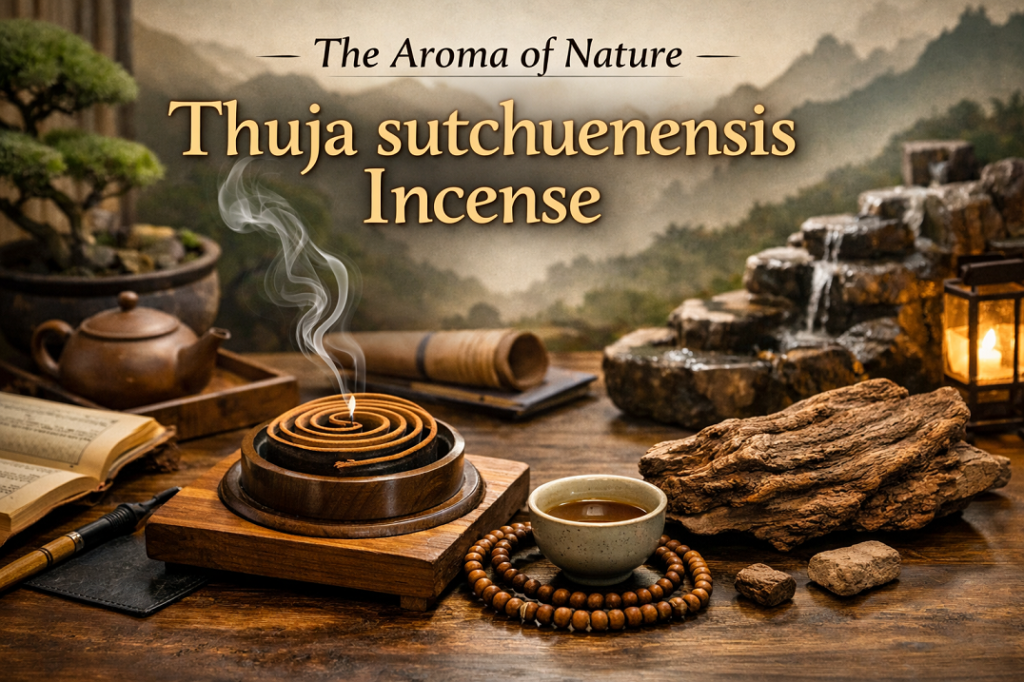
At elevations above 1,500 meters on the sheer cliffs of the Taihang Mountains, a remarkably resilient plant thrives—the Thuja sutchuenensis. Rooting itself in rocky crevices with minimal need for soil or water, it grows barely a foot tall over a century. Yet its distinctive fragrance and medicinal properties have earned it the status of a “living fossil” in the plant kingdom and a prized treasure in the world of aromatics. This article invites you to explore this natural marvel.
1. Origin and Formation of Thuja sutchuenensis Incense
Thuja sutchuenensis is an evergreen tree or shrub belonging to the genus Thuja within the Cupressaceae family. It primarily grows on cliffs and steep slopes in regions such as the Taihang Mountains and Daba Mountains in China. Its habitat is exceptionally harsh, typically found at elevations between 700 and 2100 meters, where it survives on limited rainfall and trace minerals absorbed from the rocky cliffs.
The formation of the Thuja sutchuenensis is a long and wondrous process. Its bark is grayish-brown, splitting into long, thin strips, with flattened twigs and scale-like leaves arranged in opposite pairs. Growing in extremely harsh environments, the cliff juniper develops at an exceptionally slow pace, resulting in wood of high density and high oil content.
In the 1990s, the cliff cypress was declared extinct due to its dwindling numbers. It wasn’t until the early 21st century that a small number of plants were rediscovered in the Daba Mountains region of Chongqing. Currently, the Thuja sutchuenensis remains an endangered species, and its harvesting is prohibited. This prohibition is the primary reason for the rarity and preciousness of its Incense.
2. The Efficacy and Medicinal Value of Thuja sutchuenensis Incense
The Incense of Thuja sutchuenensis is widely used in traditional medicine, and its medicinal value is highly esteemed.
Promotes relaxation and aids sleep
The Incense of Thuja sutchuenensis possesses remarkable calming and soothing properties, effectively alleviating insomnia and excessive dreaming. Its aroma enhances blood oxygen levels, promoting mental well-being and uplifting spirits. In Japan, cypress scent is revered as “air vitamins,” with cancer specialists recommending therapeutic walks through cypress forests for patients.
Skin care and beauty
The Compendium of Materia Medica records that Thuja sutchuenensis “promotes urination and invigorates yang energy.” Belonging to the metal element in the Five Elements theory, it aids lung qi and harmonizes with skin and hair. Brewing cliff cypress slices as tea or steeping them in wine can lubricate the intestines, eliminate grease, boost metabolism, clear bodily waste, and enhance skin beauty and moisture.
Anti-inflammatory and detoxifying
The aromatic essence of Thuja sutchuenensis purifies the air, kills bacteria and viruses, and possesses anti-inflammatory and swelling-reducing properties. Cliff cypress essential oil is remarkably effective against insect bites and unexplained swellings and pains. The Chinese Pharmacopoeia records: “In eastern Sichuan, those suffering from hemorrhoids find remarkable relief from pain and swelling by sitting on cypress wood; boiling the wood in water nourishes hair and treats scabies and ringworm.”
Modern research indicates that Thuja sutchuenensis contains multiple active components, including volatile oils, flavonoids, terpenoids, and phenolic compounds. It exhibits diverse pharmacological effects such as hemostasis, cough suppression and expectoration, bronchodilation, antibacterial activity, antitumor properties, and antioxidant effects.
3. Uses and Applications of Thuja sutchuenensis Incense
Incense Wellness
Thuja sutchuenensis incense is an ideal material for crafting high-quality incense. Commonly available forms include stick incense, coil incense, tower incense, and inverted incense. The smoke produced when burning Thuja sutchuenensis incense can adsorb airborne particulate matter, effectively improving indoor air quality. Its fragrance not only helps soothe emotions but also alleviates fatigue.
Religious Culture
Since ancient times, the Thuja sutchuenensis has been cherished by imperial courts, Buddhist and Taoist traditions, as well as modern scholars and poets. In Taoist culture, cypress wood is simmered into decoctions to pray for health and longevity. During the New Year season, people also steep cypress wood in wine, symbolizing the warding off of evil spirits and misfortune.
Craft Collection
The roots of the Thuja sutchuenensis exhibit twisted and peculiar forms, featuring high wood density and rich oil content, making them an excellent material for crafting root sculptures, decorative ornaments, and bead bracelets. The roots and trunks of cliff cypress trees that have withered away in the crevices of the Taihang Mountains develop uniquely graceful, curved, and dynamic shapes due to their growth in extremely harsh environments.
Daily Applications
Thuja sutchuenensis incense can also be used for daily wellness. Placing small pieces of Thuja sutchuenensis wood near the bedside helps improve sleep. Thuja sutchuenensis wood shavings or carved ornaments release fragrance over time, repelling insects and preventing woodworm damage.
4. Fragrance Characteristics and Identification of Thuja sutchuenensis Incense
The fragrance of Thuja sutchuenensis is complex and layered, primarily falling into the following categories:
Fruity aroma: Taihang Thuja sutchuenensis possesses a refreshing fruity scent—subtle yet deeply captivating, free from any medicinal undertones.
Sweet aroma (milky fragrance): Primarily derived from aged Taihang or Qinling wood, featuring an intense aroma with pronounced sweetness.
Herbal fragrance: Primarily derived from Sichuan-grown Thuja sutchuenensis from the Daba Mountains, blending the bitterness and sweetness of traditional Chinese medicine with a refreshing coolness, featuring a distinctive minty undertone.
Methods for Identifying the Quality of Thuja sutchuenensis Incense:
Assess oil content: Higher oil content is preferable. High-quality Thuja sutchuenensis features abundant resin with a rich, saturated feel and a vibrant luster.
Testing Density: The heavier the specific gravity and form of the Thuja sutchuenensis, the better. Premium aged cliff cypress sinks in water, making a distinct “thud” as it drops to the bottom.
Smell the fragrance: Authentic Thuja sutchuenensis incense possesses a rich, sweet aroma or milky scent that is clear, distant, and long-lasting, without any harshness.
Examine the growth rings: The finer and denser the rings, the longer the tree has lived and the better its wood quality.
It is important to note that 90% of the “Thuja sutchuenensis incense” available on the market may not be genuine. Most are counterfeits made from Chinese arborvitae or common arborvitae, or consist of unaged raw materials, and some even contain artificial fragrances. When purchasing, choose reliable sources and look for aged, matured materials from the core production areas of the Taihang Mountains and Qinling Mountains.
5. Current Protection Status and Sustainable Development
Due to excessive logging and a narrow distribution range, the Chinese Thuja sutchuenensis faces severe survival threats. The Xuebaoshan National Nature Reserve in Chongqing has cumulatively propagated over 3 million seedlings, with 750,000 returned to the wild. It has also established ex situ conservation trial bases in more than 10 provinces and municipalities, including Beijing and Tibet.
As consumers, we should boycott wild Thuja sutchuenensis products and support those cultivated through artificial propagation. Additionally, reasonable alternatives to Thuja sutchuenensis incense, such as extracts from other cypress family plants, can be chosen to meet daily needs.
Thuja sutchuenensis Incense, this natural gift bearing the frost and snow of millennia, is not merely a fragrance but a cultural symbol and spiritual emblem. From precipitous cliffs to human living spaces, it sustains the harmonious dialogue between nature and humankind through its unique aroma and medicinal value.